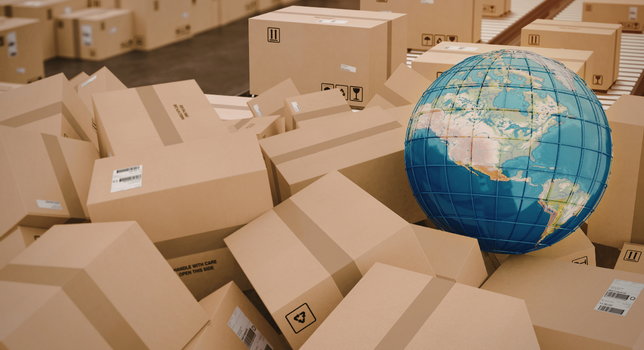
New research from Smithers, the global authority on the packaging industry, values the global e-commerce packaging market at $78.4 billion in 2025 – an increase of 7.8% year-on-year. It is forecast to reach $105.2 billion by 2031, according to latest market study,
The Future of E-commerce Packaging to 2031. The forecast represents a compound annual growth rate (CAGR) of 4.8% over the 2026–2031 period.
Growth in 2025 was fuelled by the continued transition from physical to digital retail – itself largely driven by marketplace accessibility via smartphones – alongside a significant rebound in the Chinese e-commerce market. Looking ahead to 2031, the report identifies the most dynamic growth coming from South & Central America and the Middle East & Africa, where increasing digital inclusion, a burgeoning youth demographic, and rapid advances in payments and logistics infrastructure are creating new e-commerce ecosystems. However, the greatest net increase in absolute market value will come from China and the United States, the world’s two largest e-commerce markets, followed by Brazil and Japan.
Corrugated boxes will retain the dominant share of packaging sales through 2031, though their position is gradually being eroded. Market share is forecast to decline from 79.7% in 2025 to 77.1% in 2031, as the widespread adoption of right-sizing reduces overall shipment volumes, cuts dimensional shipping costs, and eliminates the need for excess void fill.
Flexible packaging is set to outpace all rival categories over the forecast period. Its appeal lies in a combination of shipping efficiency, lower material weight, and improving sustainability credentials, including growing compatibility with established recycling streams.
In terms of end-use sectors, clothing, footwear, and accessories will remain the primary driver of e-commerce packaging demand, growing at a CAGR of 6.3% between 2026 and 2031 and increasing its overall share of the market from 28.5% to 31.1%. The rapid pace of fashion trends – heavily influenced by social media and influencer culture – continues to encourage frequent purchases and swift style adoption, sustaining high volumes of individual shipments.
Meanwhile, Ships in Own Container (SIOC) has evolved from an optional sustainability initiative to a standard operational requirement for major retailers and direct-to-consumer brands. By eliminating the need for additional outer packaging, SIOC reduces material use, lowers fulfilment costs, and supports broader circular economy objectives.
The EU’s Packaging and Packaging Waste Regulation (PPWR), effective from early 2025, is making reuse and refill systems mandatory for specific e-commerce and packaging segments – moving the industry beyond recycling into full system redesign.
The report identifies a significant shift from traditional plastics to fibre-based materials, bioplastics, and recycled content, reflecting both regulatory pressure and the high recyclability and renewable qualities of these alternatives.
The Future of E-commerce Packaging to 2031 provides comprehensive market sizing, segmentation, and forecasts by packaging format, material, geographic region, and end-use sector, alongside in-depth analysis of the regulatory, competitive, and technological forces reshaping the industry.