
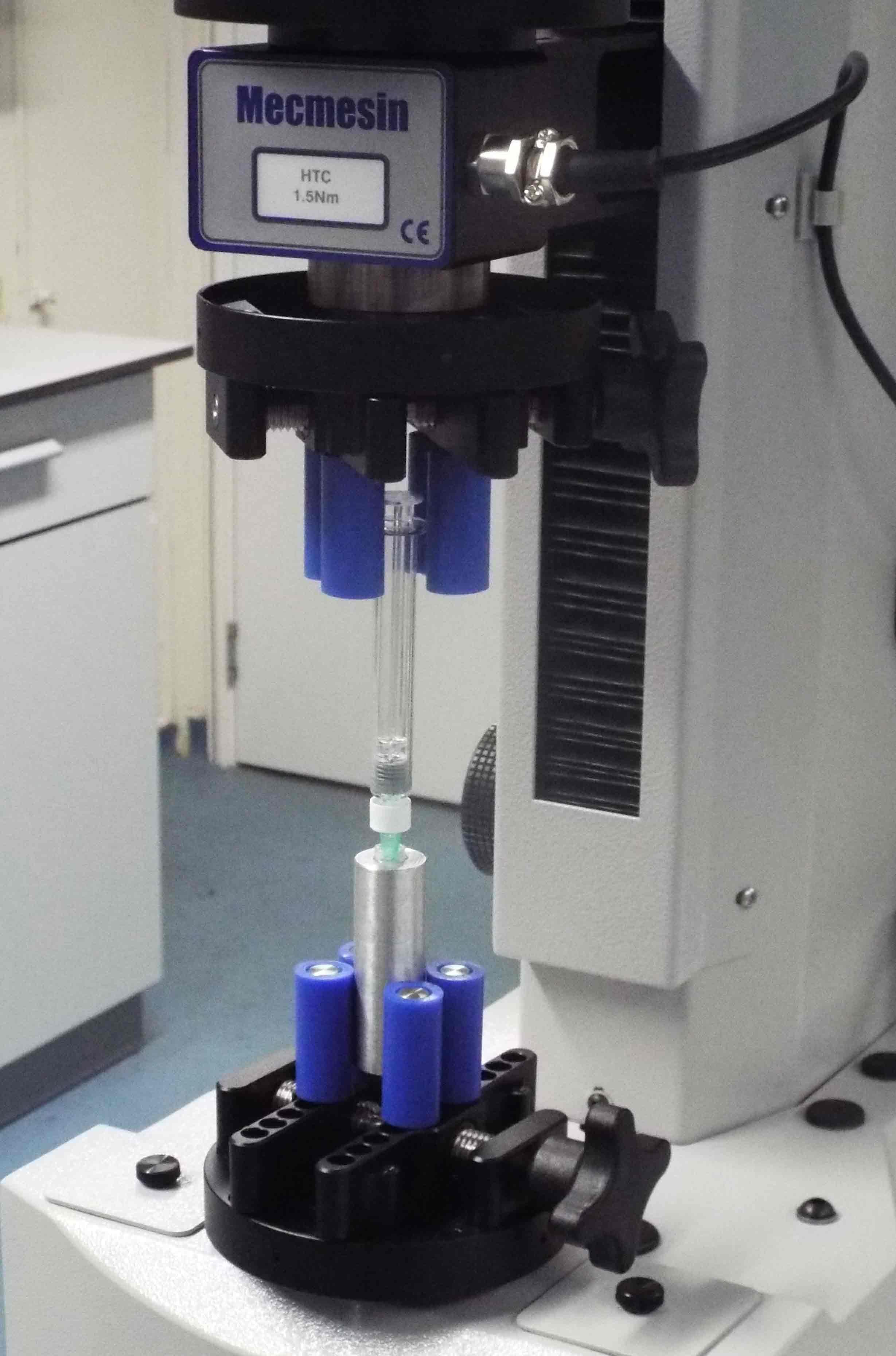
 Applicable standard test methods include:
- ASTM D2063, "The torque retention of continuous thread closures on containers, with matching finishes, for predetermined environmental conditions over time"
- ASTM D3198, "Standard Test Method for Application and Removal Torque of Threaded or Lug-Style Closures".
For precision applications, such as syringe Luer fittings, the Mecmesin Helixa torque system is used in conjunction with data acquisition software. In addition to providing a motorised application, its counterbalancing mechanism allows the removal of axial force, whilst enabling the application of a precise top load when required.
Leak resistance of closures
Closures applied to nominal application torque are routinely tested for resistance to leakage after storage at elevated temperature, simulated transit vibration or vacuum testing as detailed in ASTM D4991 "The testing of empty containers for resistance to leakage under differential pressure conditions such as those which can occur during air transport".The causes of leakage can be investigated by dimensional analysis of the container and closure thread dimensions with the aid of a non-contact optical measuring stage.
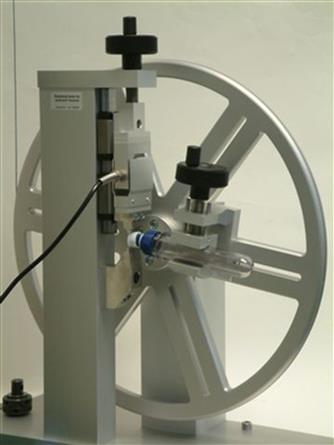
Sports closure testing (BSDA Code of Practice)
The BSDA "Code of Practice for Sports Closures" sets out the tests needed to demonstrate due diligence for sports closures.
Smithers is able to test closures to all aspects of the code, including the rotational opening force test which was developed for push-pull closures by Smithers (see rig).
Bite testing
Bite testing is a mechanical evaluation used to assess valve retention and overall closure security in sports bottle closures. This method provides additional insight into how a closure design may perform when subjected to biting forces, particularly relevant for products intended for use by children.
Using a bite test simulator, the closure is applied to a preform 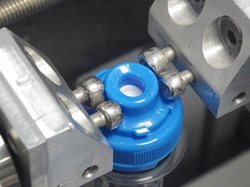 and positioned within a controlled test apparatus. The assembly is then exposed to a programmed sequence of twenty bites at a specified force. These bites are delivered randomly around the full 360° axis of the spout to ensure representative loading conditions. The simulator incorporates stainless-steel molar crowns - upper and lower, left and right; selected to approximate the dimensions of a child's primary molars.
Although bite testing is not currently a requirement of the British Soft Drinks Association (BSDA) "Code of Practice for Hinged Flip Lid Closures" (3rd edition, January 2016), many organisations use bite testing to support compliance efforts and strengthen confidence in new closure designs.
Smithers offers bite testing as part of our closure testing services to help validate design performance, and support evidence-based decision-making in product development.